11 min read
AI Recruiting Tools 2026: Trends, Costs, and Key Players
AI recruiting tools now shape who gets seen. Learn how screening works, which platforms matter, and how to adapt your applications.
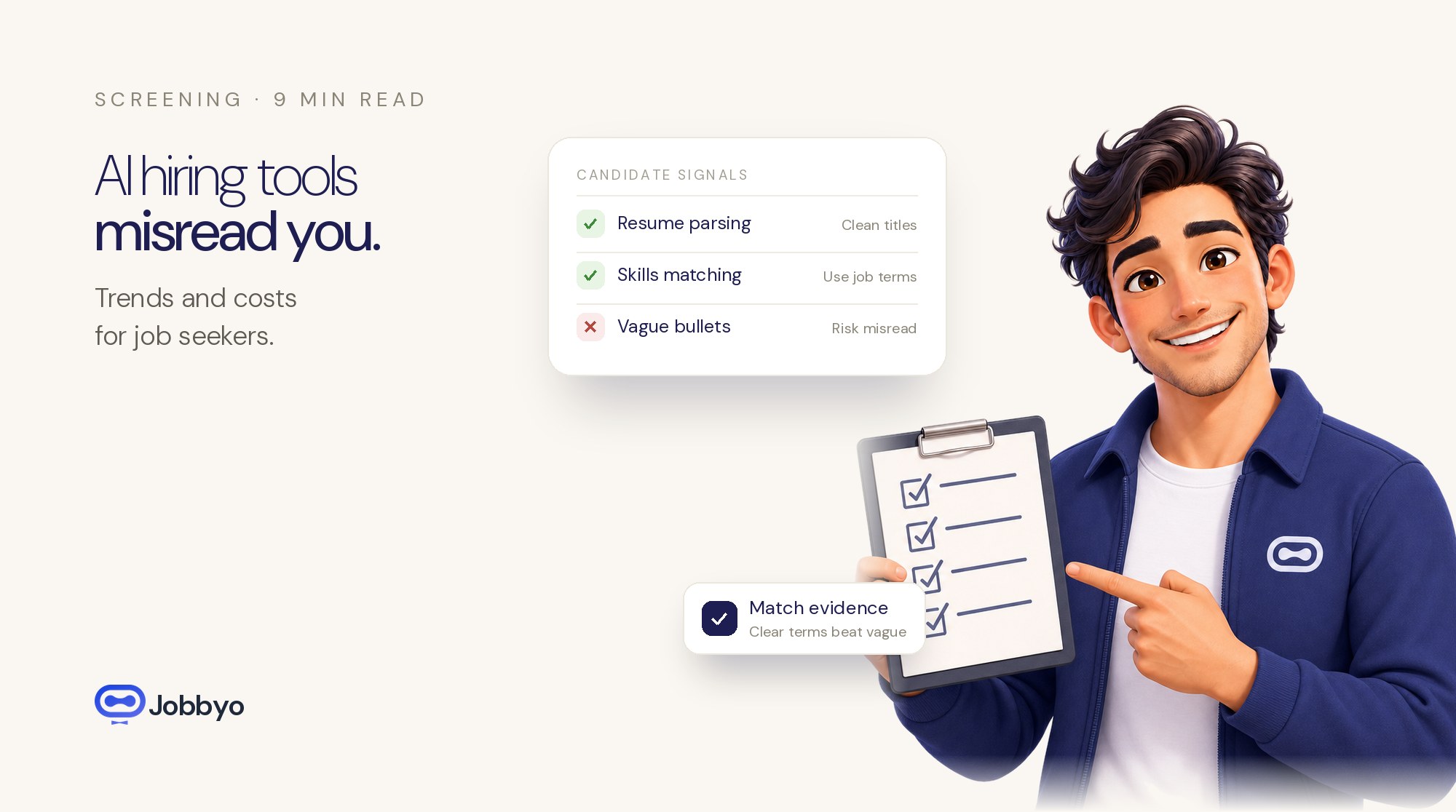
AI recruiting software is no longer a back-office filing cabinet. In 2026, it can decide which resumes get parsed, which LinkedIn profiles surface in recruiter searches, which applicants get ranked, which interviews get summarized, and which candidates disappear into the portal before a person studies the full application.
That is not a reason to panic. It is a reason to stop sending vague resumes into systems built to compare exact job requirements against exact evidence.
A recruiter may still make the hiring call. But Workday, LinkedIn Recruiter, Greenhouse, iCIMS, Eightfold, HireVue, HackerRank, Paradox, and similar tools can shape the path to that recruiter. Your resume, LinkedIn profile, titles, skills, certifications, location, and answers to knockout questions all need to tell the same story: this person matches this role.
What AI recruiting tools do in 2026
AI recruiting tools help employers find, screen, rank, contact, interview, and manage candidates. Some live inside applicant tracking systems. Others plug into sourcing databases, assessment platforms, interview tools, HR suites, or internal mobility systems.
For candidates, the important part is blunt: the tool may not hire you, but it can affect whether your application gets attention.
Common AI-driven recruiting functions include:
- Resume parsing and candidate-profile extraction
- Matching resumes against job requirements
- Pulling skills from resumes, LinkedIn profiles, and internal employee records
- Ranking applicants or recommending next actions to recruiters
- Searching resume databases and public profiles
- Drafting recruiter outreach
- Running chatbot screens and scheduling interviews
- Transcribing interviews and generating summaries
- Matching current employees to internal roles
- Producing compliance, audit, and adverse-impact reports
The obvious risk is bias. The daily risk is mislabeling.
A qualified candidate can lose ground because the resume says “client reporting” while the job post says “executive dashboards,” or because a senior manager lists “team leadership” but buries the hands-on Salesforce, Python, SOC 2, Figma, dbt, or demand-generation work the system is looking for.
The software rewards clean evidence. It punishes ambiguity.
Major AI recruiting categories and vendors
Job seekers do not need to memorize every vendor. They do need to understand where the filters sit.
| Category | Examples | Candidate impact |
|---|---|---|
| HR suites and ATS platforms | Workday, SAP SuccessFactors, Oracle HCM, UKG, ADP, Greenhouse, Lever, iCIMS, SmartRecruiters, Ashby | Application intake, resume parsing, recruiter workflow, status changes, ranking signals |
| Talent intelligence and matching | Eightfold AI, HiredScore, Phenom, Beamery, SeekOut | Skills matching, talent pools, internal mobility, applicant prioritization |
| Sourcing and outreach | LinkedIn Recruiter, Indeed, Gem, SeekOut, hireEZ | Whether recruiters find you before you apply |
| Interview and assessment platforms | HireVue, Modern Hire, HackerRank, Codility, CodeSignal, TestGorilla | Video screens, technical tests, structured interview workflows, assessment scores |
| Writing and job-ad tools | Textio, Datapeople, Grammarly Business | Job-post language, recruiter messages, candidate communications |
| Chatbots and scheduling | Paradox, iCIMS Digital Assistant, Phenom, Paradox’s Olivia and similar assistants | Knockout questions, scheduling, interview reminders, candidate updates |
A data engineer, Salesforce admin, UX designer, product marketer, InfoSec analyst, or finance manager may hit several systems in one search. LinkedIn may surface the profile. An ATS may parse the resume. An assessment platform may score a test. An interview tool may summarize the recruiter screen. A matching layer may compare the candidate against current employees or previous hires.
That is why applying to 100 roles with one generic resume is usually expensive theater. If the first ten systems misread the resume, the next ninety probably will too.
Hiring-tech news candidates should actually care about
Most recruiting-tech announcements are written for HR buyers. Here is the candidate version: the date, the shift, and the move to make.
Workday pushed further into AI matching
News: On February 27, 2024, Workday announced an agreement to acquire HiredScore, a company focused on AI-powered talent orchestration and candidate matching.
Candidate impact: Workday already sits inside many large-company hiring processes. Adding HiredScore signals that enterprise employers want more software support for prioritizing applicants, surfacing internal candidates, and telling recruiters where to spend time.
Move: Treat every application as a matching exercise. Use the target job title, required tools, certifications, industry terms, and measurable outcomes from the posting when they are accurate. Do not stuff keywords into a fake skills wall. Translate your real experience into the employer’s language.
LinkedIn made recruiter search more conversational
News: On October 3, 2023, LinkedIn announced Recruiter 2024, including AI-assisted search and messaging features that let recruiters describe the talent they want in more natural language.
Candidate impact: Recruiters are not limited to exact-title searches. They can describe a profile, and LinkedIn can help build searches and outreach around that description. A thin LinkedIn profile gives the system less to work with.
Move: Make your LinkedIn headline, About section, experience bullets, and skills match the roles you want next. If you are moving from finance into product analytics, say so directly. Spell out the bridge: dashboards, forecasting, SQL, stakeholder reporting, experimentation, revenue analysis, or whatever is true.
Federal agencies warned employers about algorithmic hiring risk
News: On May 12, 2022, the EEOC and DOJ issued technical assistance warning that algorithmic hiring tools can create disability-discrimination risks. On May 18, 2023, the EEOC issued guidance explaining how selection procedures, including algorithmic tools, can create adverse impact under Title VII.
Candidate impact: Employers cannot simply blame a vendor if a hiring process screens people out unlawfully. That does not mean candidates will automatically see a score, ranking, or explanation.
Move: If you need an accommodation for a timed assessment, video interview, chatbot screen, or online test, ask for it. Save the job description, application materials, emails, assessment instructions, and rejection notices.
Local and global rules started catching up
News: New York City’s Local Law 144 enforcement began on July 5, 2023, requiring bias audits and candidate notices for certain automated employment decision tools. In Europe, the EU AI Act was approved by the European Parliament on March 13, 2024 and by the Council of the European Union on May 21, 2024. Employment-related AI is treated as high-risk under that law.
Candidate impact: AI hiring is moving out of the “trust us” era. Employers using covered tools face more pressure to document, audit, and disclose parts of the process. The rules vary by location and use case, so do not assume every portal will look the same.
Move: Watch for notices about automated tools, especially in regulated markets. If the process feels unusually automated or opaque, keep records. You may never need them. If you do, you will be glad you have them.
How these systems screen and rank candidates
Most recruiting software is not reading your resume like a thoughtful hiring manager with coffee and twenty quiet minutes. It is extracting fields, comparing terms, and helping recruiters sort volume.
The system may evaluate:
- Current and past job titles
- Required and preferred skills
- Years-of-experience language
- Certifications, licenses, degrees, and security clearances
- Industry background
- Tools and platforms named in the posting
- Location, remote eligibility, and work authorization
- Knockout-question answers
- Salary expectations, when requested
- Assessment performance
- Interview notes, transcripts, or summaries
This is where strong candidates get hurt.
A career changer may have the right skills but use language from the old industry. A senior candidate may sound strategic and never prove current technical depth. A remote candidate may forget to state eligible states or time zones. A technical specialist may list tools in a skills section but fail to connect them to revenue, uptime, conversion, compliance, cost savings, or delivery speed.
If the job post asks for “Salesforce CPQ,” “enterprise SaaS,” “SOC 2,” “Python,” “dbt,” “Figma,” or “demand generation,” those terms should appear naturally in the resume when they are true. Put them inside bullets that show work performed, not inside a bloated keyword dump.
What AI recruiting tools cost employers
Enterprise hiring software is usually quote-based, so job seekers will not see the invoice. But the pricing model explains employer behavior.
Employers commonly pay through:
- Recruiter-seat licenses
- HR-suite contracts priced by employee count or module
- Applicant tracking system contracts
- Job-posting or sponsored-listing fees
- Resume database and sourcing licenses
- Assessment packages
- Interview platform contracts
- AI add-ons or usage-based credits
- Implementation, integration, training, and compliance services
The ROI pitch is simple: process more applicants with fewer recruiter hours, shorten time-to-fill, rediscover past candidates, reduce scheduling drag, standardize screens, and produce cleaner reporting.
That can help candidates when the tool surfaces a buried profile or speeds up a slow process. It can also hurt candidates when the employer optimizes for speed and the resume does not map cleanly to the requisition.
Efficiency is not the same as judgment.
What recruiters like and candidates hate
Recruiters like these tools when they remove repetitive work: sorting resumes, finding niche skills, drafting outreach, scheduling interviews, logging notes, and summarizing screens.
Candidates usually hate three things:
- Silence. You apply through a portal and never get a useful update.
- Misread experience. You are qualified, but the system or recruiter does not understand the bridge.
- Low-intent postings. You spend time on stale, already-filled, duplicated, or exploratory roles.
A recruiter dealing with hundreds of applicants for one remote role wants triage. A candidate juggling Workday logins, assessment links, chatbot prompts, and rejection emails wants evidence that a human looked at the application. Both frustrations are real.
AI did not create the broken job search. It can make the broken parts faster.
The best hiring teams use AI to remove clerical drag, then let people make accountable decisions. The best candidates write applications that a parser can understand and a recruiter can believe.
How to reduce ATS mismatch in 2026
Do not try to “beat” the ATS. Make the match obvious.
Before applying:
- Compare your resume against the exact job description.
- Use the role’s core language when it truthfully describes your experience.
- Put skills in work context, not only in a skills list.
- Translate old-industry language into target-role language.
- Make location, remote eligibility, and work authorization clear.
- Use standard headings: Experience, Skills, Education, Certifications.
- Avoid graphics, columns, tables, text boxes, and formatting that can parse badly.
- Tailor the summary and top bullets for the role.
- Answer knockout questions honestly and precisely.
- Prioritize fresh, credible postings over stale listings with no hiring signal.
For career changers, the translation step matters most. “Managed financial reporting” may need to become “built executive dashboards,” “owned stakeholder reporting,” or “improved forecasting workflows,” if those statements are accurate. The work may be relevant. The old wording may hide it.
For senior or confidential candidates, the problem is different. You may need to show executive scope without erasing current hands-on expertise. A VP, director, principal engineer, or head of marketing can still need explicit references to platforms, markets, compliance frameworks, revenue motions, or technical systems.
Reputation does not parse. Evidence does.
Where Jobbyo fits
Jobbyo is built for candidates who need to move faster without spraying the same weak application everywhere.
It helps tailor resumes and cover letters to specific roles, reduce ATS mismatch, and avoid wasting time on ghost or stale postings. That matters when the hiring process is split across sourcing tools, ATS platforms, assessments, interview software, and AI matching layers.
Use Jobbyo when you need to:
- Reposition transferable skills for a career pivot
- Move quickly after a layoff without lowering application quality
- Apply selectively while employed
- Match niche technical skills to credible openings
- Avoid stale postings before spending time on them
- Create role-specific resumes and cover letters without starting from a blank page each time
AI recruiting tools are now part of the gate. You cannot control Workday’s configuration, LinkedIn’s search behavior, a recruiter’s workflow, or an employer’s ranking model.
You can control whether your application makes the match obvious.
That is still leverage.
Put this to work
Let Jobbyo find your
best matches for you.